pp-low-migration-food-safe-normal-use

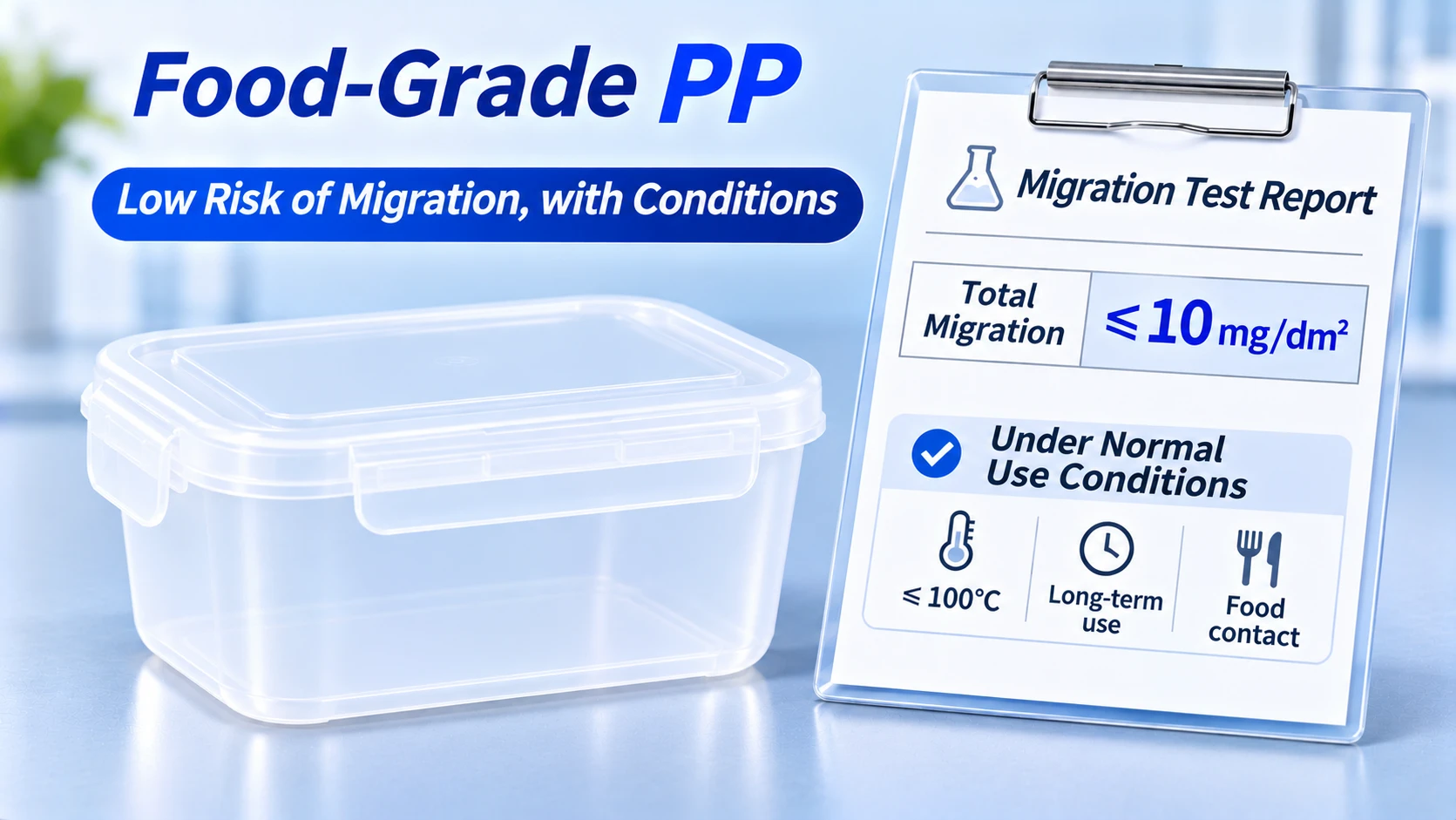
Why Is PP Unlikely to Leach Harmful Substances?

11/09/2026

PP does not readily release harmful substances, for reasons in three areas—structure, formulation and conditions of use: its large molecules do not easily volatilize or permeate, it needs no plasticizers and contains no bisphenol A, and it is chemically inert and slow to react. But there is a precondition: normal conditions of use. At high temperatures or after long-term aging, the picture changes. This article explains why PP is relatively safe and where the boundaries lie.
pp-food-container-microwave-safe-number-5-lid-off

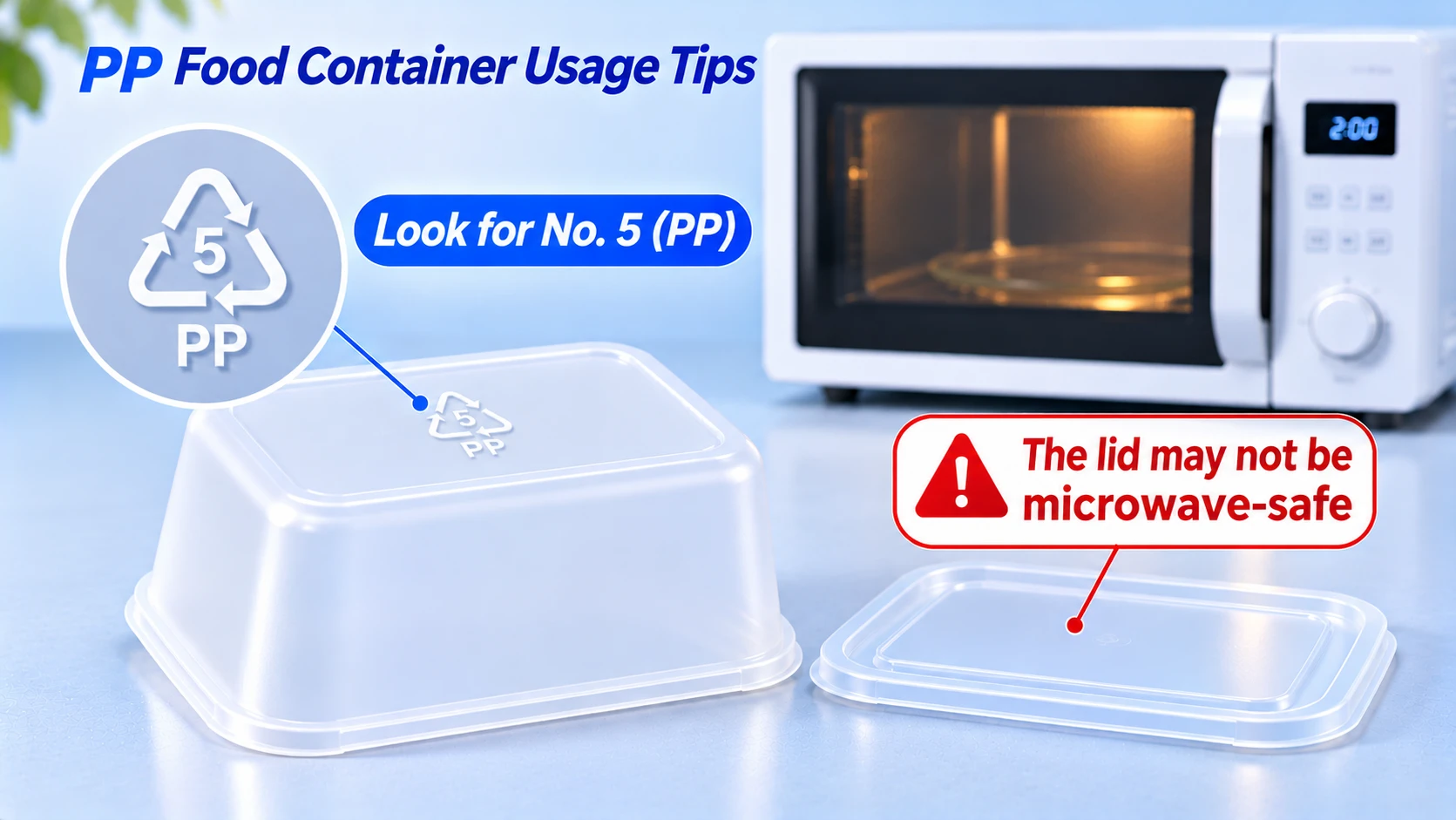
Why PP Food Containers Are Microwave-Safe

11/07/2026

Most microwaveable food containers are made of PP: sufficient heat resistance, no plasticizers, and strong chemical inertness. But that doesn't mean every PP container can go straight into the microwave—lid material, oily or high-sugar foods, and whether a "microwave-safe" label is present are all easy pitfalls. This article explains why PP works in the microwave, and the few things you must watch out for when using it.

 pp-vs-pvc-difference-food-container-cable

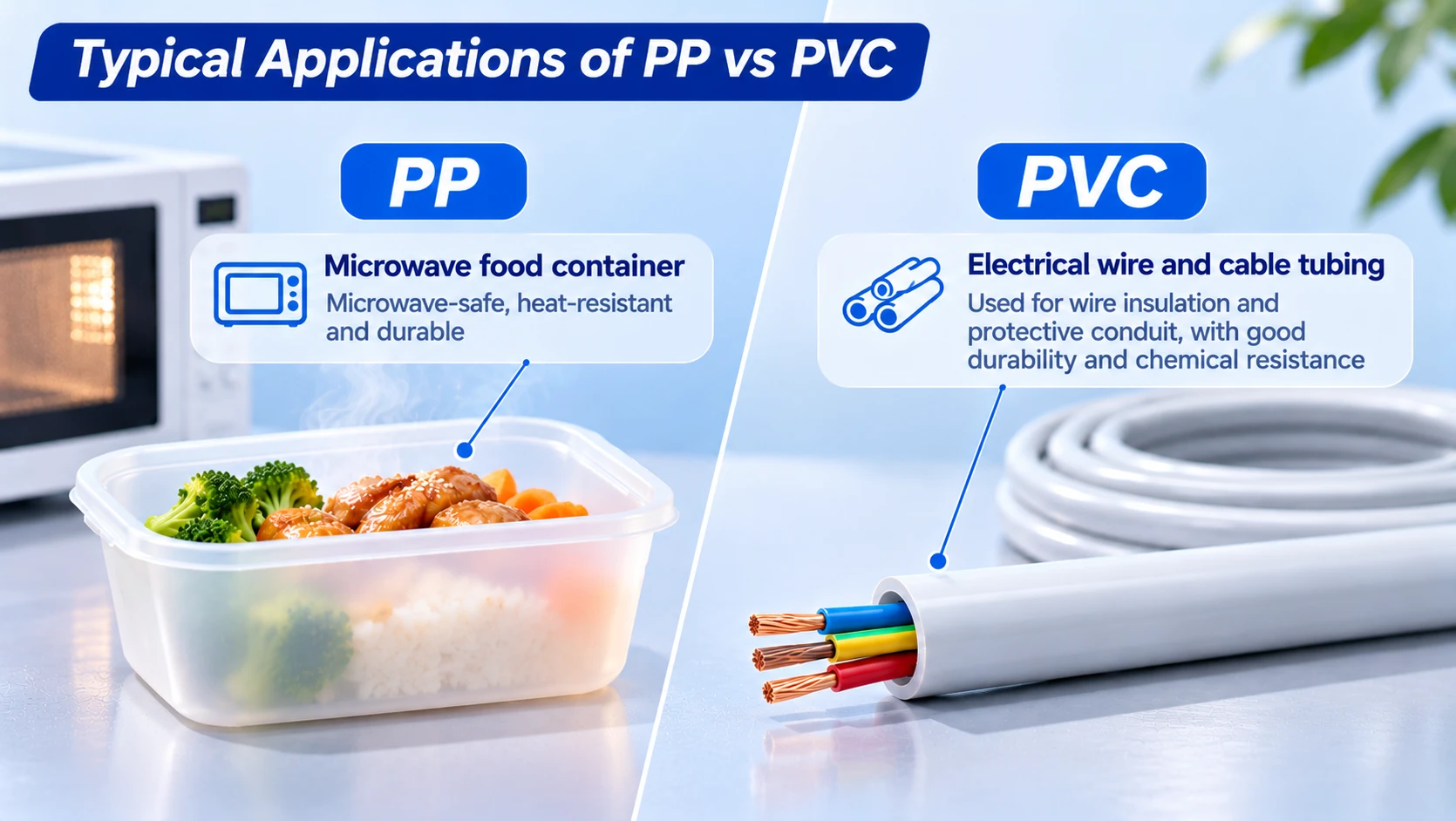
PP vs PVC: What's the Difference

11/04/2026

PP and PVC sound similar, but their composition, additives, heat resistance, and uses differ greatly. This article compares their core differences across five dimensions and explains why hot-food packaging is basically PP rather than PVC, as well as what these differences mean for 3D printing material selection.