pp-food-contact-standard-gb4806-7-test-report

What Standards Must PP Food Contact Materials Meet?

11/10/2026

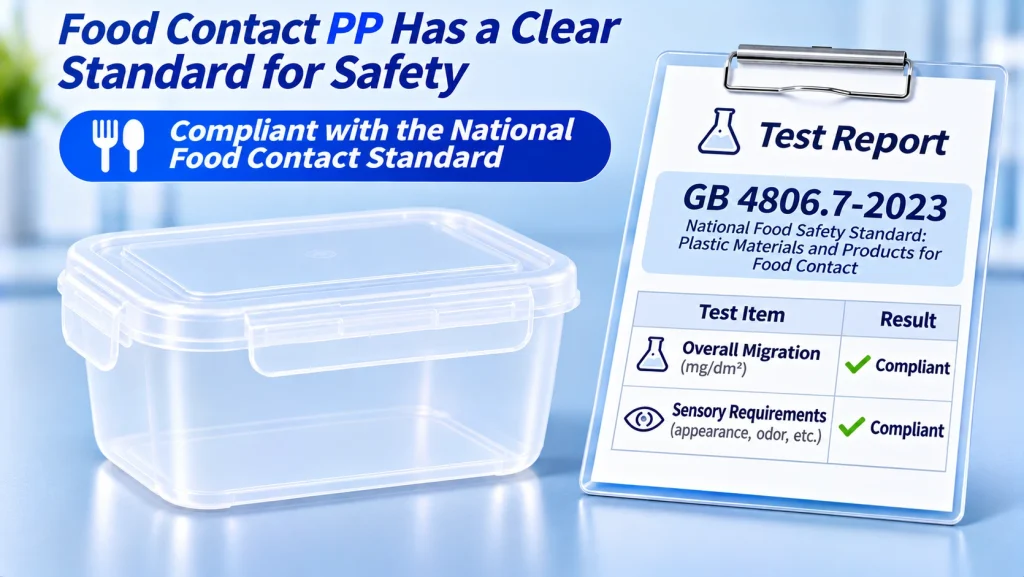
Plastics that hold food are not held to the same standard as ordinary plastics. In China the GB 4806 series applies, with GB 4806.7 covering plastics. At the heart of the standard is "how much can migrate out": overall migration, specific migration, sensory requirements and heavy metals. This article explains what the standard requires, how consumers can judge a product, and where PPpro draws the line in its wording before certification is obtained.
pp-low-migration-food-safe-normal-use

Why Is PP Unlikely to Leach Harmful Substances?

11/09/2026

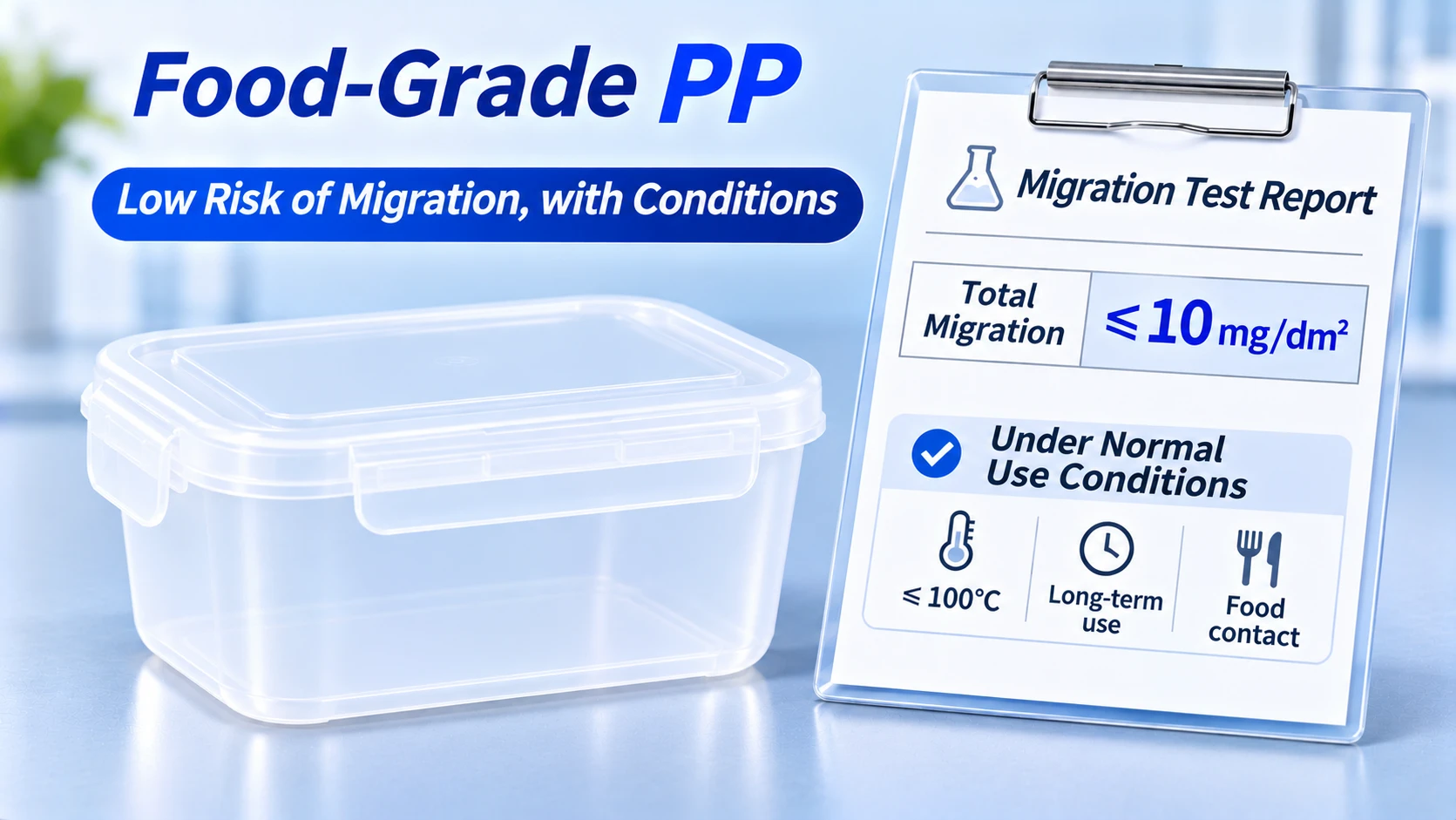
PP does not readily release harmful substances, for reasons in three areas—structure, formulation and conditions of use: its large molecules do not easily volatilize or permeate, it needs no plasticizers and contains no bisphenol A, and it is chemically inert and slow to react. But there is a precondition: normal conditions of use. At high temperatures or after long-term aging, the picture changes. This article explains why PP is relatively safe and where the boundaries lie.

pp-food-container-microwave-safe-number-5-lid-off

Why PP Food Containers Are Microwave-Safe

11/07/2026

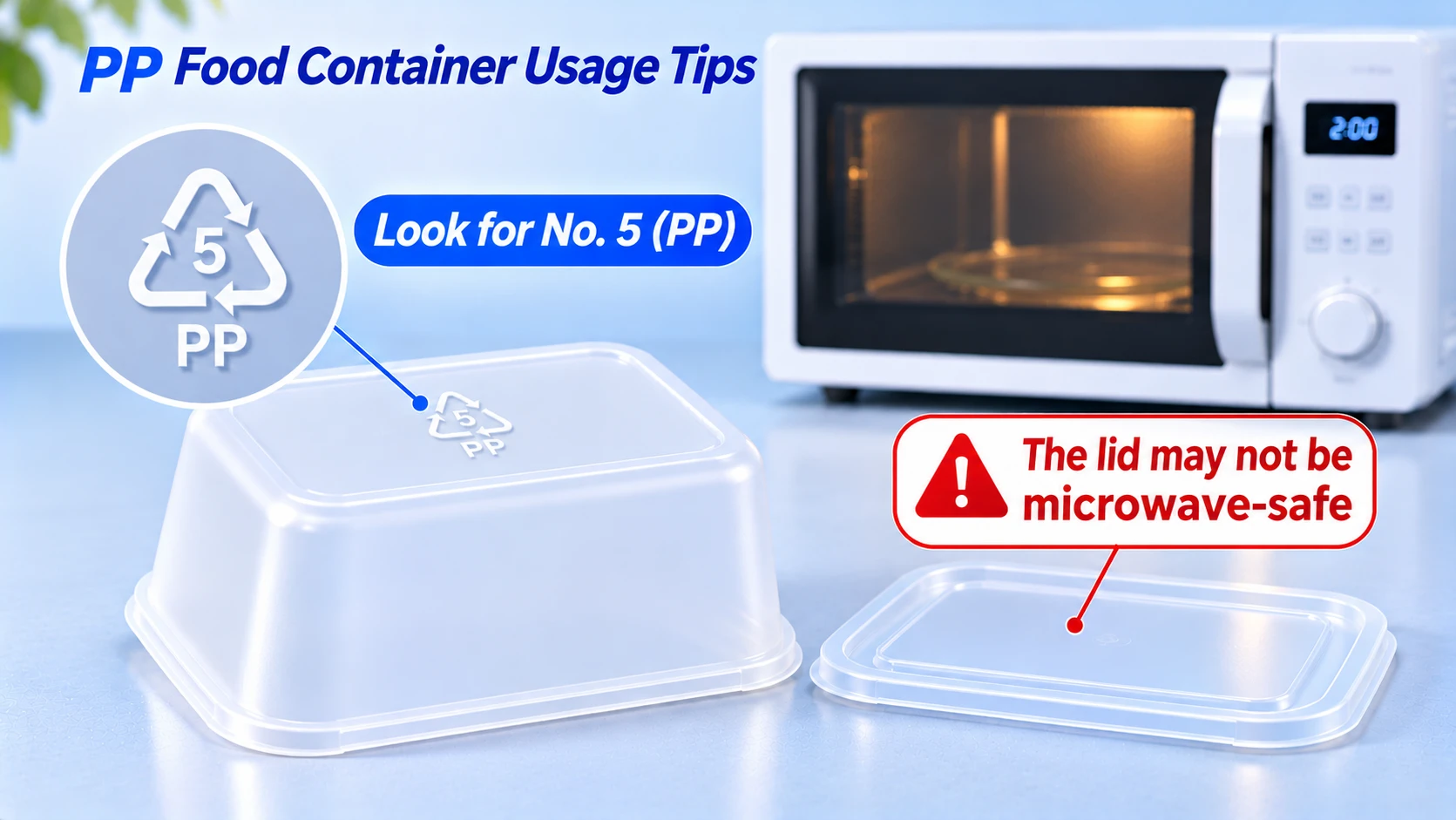
Most microwaveable food containers are made of PP: sufficient heat resistance, no plasticizers, and strong chemical inertness. But that doesn't mean every PP container can go straight into the microwave—lid material, oily or high-sugar foods, and whether a "microwave-safe" label is present are all easy pitfalls. This article explains why PP works in the microwave, and the few things you must watch out for when using it.