pp-vs-ps-difference-food-container-foam

PP vs PS: What’s the Difference

11/05/2026

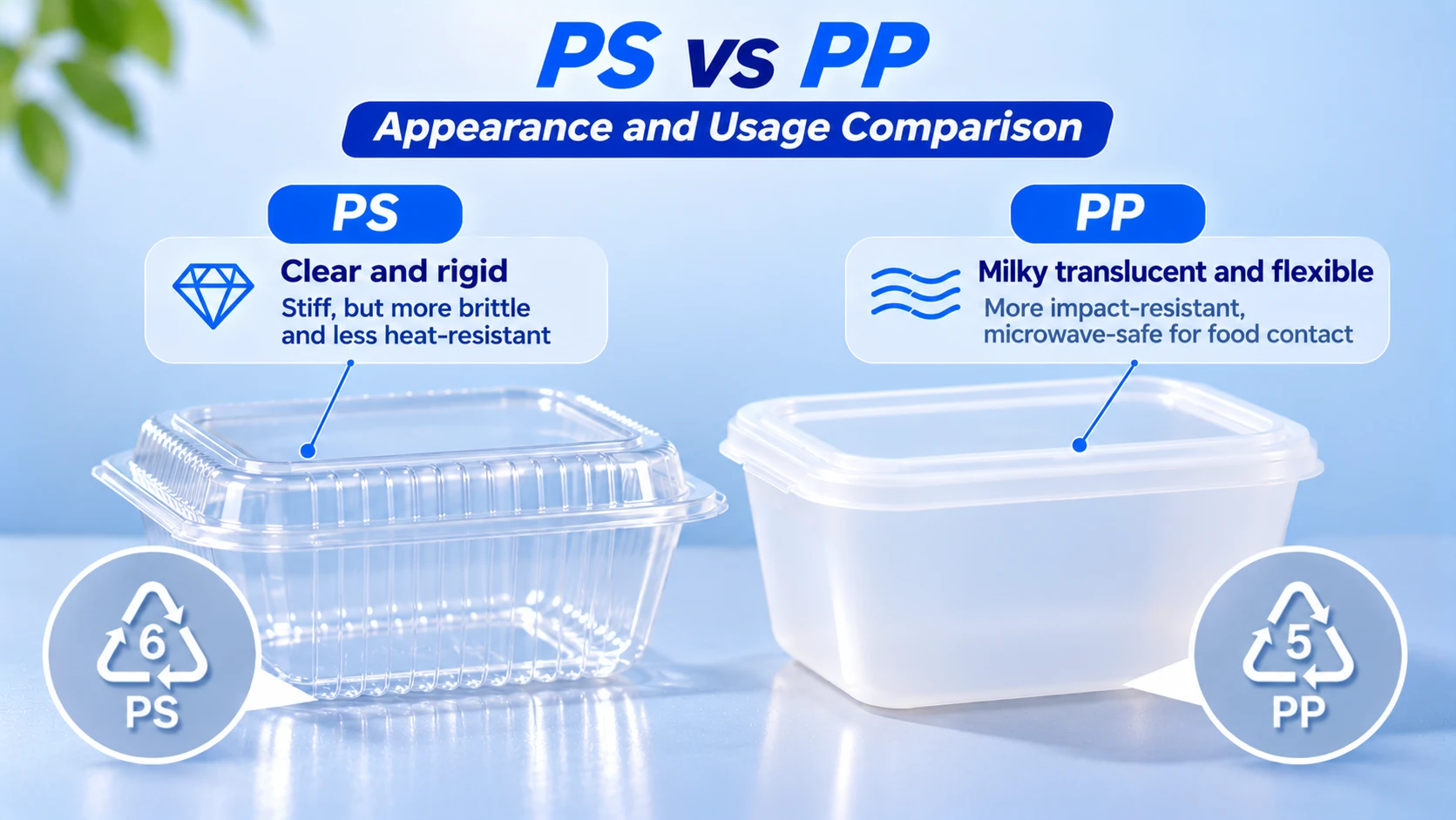
PS and PP are both widely used in disposable tableware and packaging, but one is brittle, one is tough; one fears heat, one resists it. This article explains their differences across four dimensions—transparency, toughness, heat resistance, and oil/alcohol resistance—and why microwave containers are essentially always made of PP.
pp-vs-pe-difference-food-container-plastic-bag

PP vs PE: How to Tell Them Apart at a Glance

11/04/2026

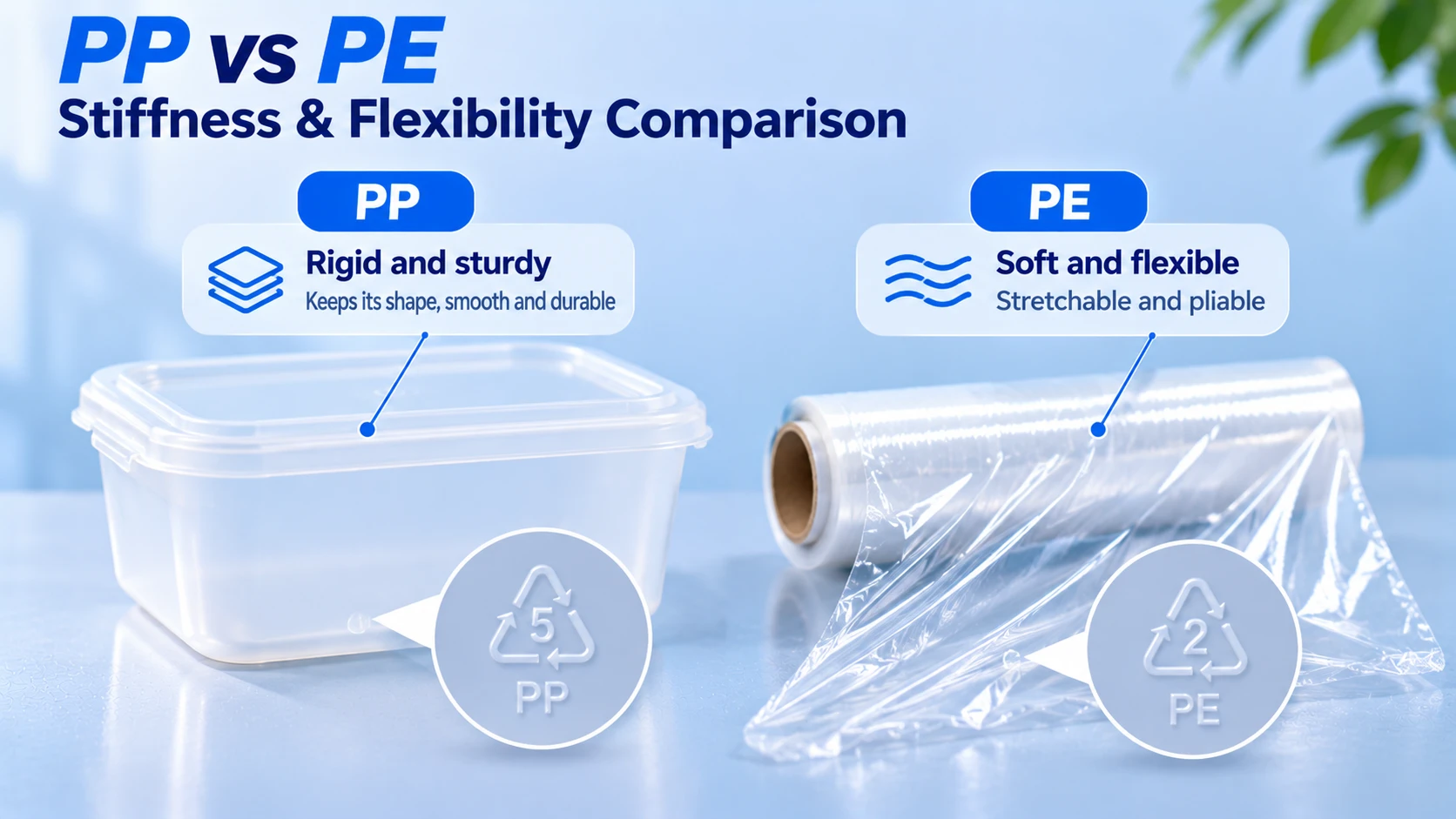
PP and PE are close relatives—both made only of carbon and hydrogen and neither containing chlorine or BPA. The difference lies mainly in rigid versus soft: PP is harder and more heat-resistant, while PE is softer and more cold-resistant. This article clarifies how to tell them apart and the practical ways to identify them at a glance.

 pp-vs-pvc-difference-food-container-cable

PP vs PVC: What's the Difference

11/04/2026

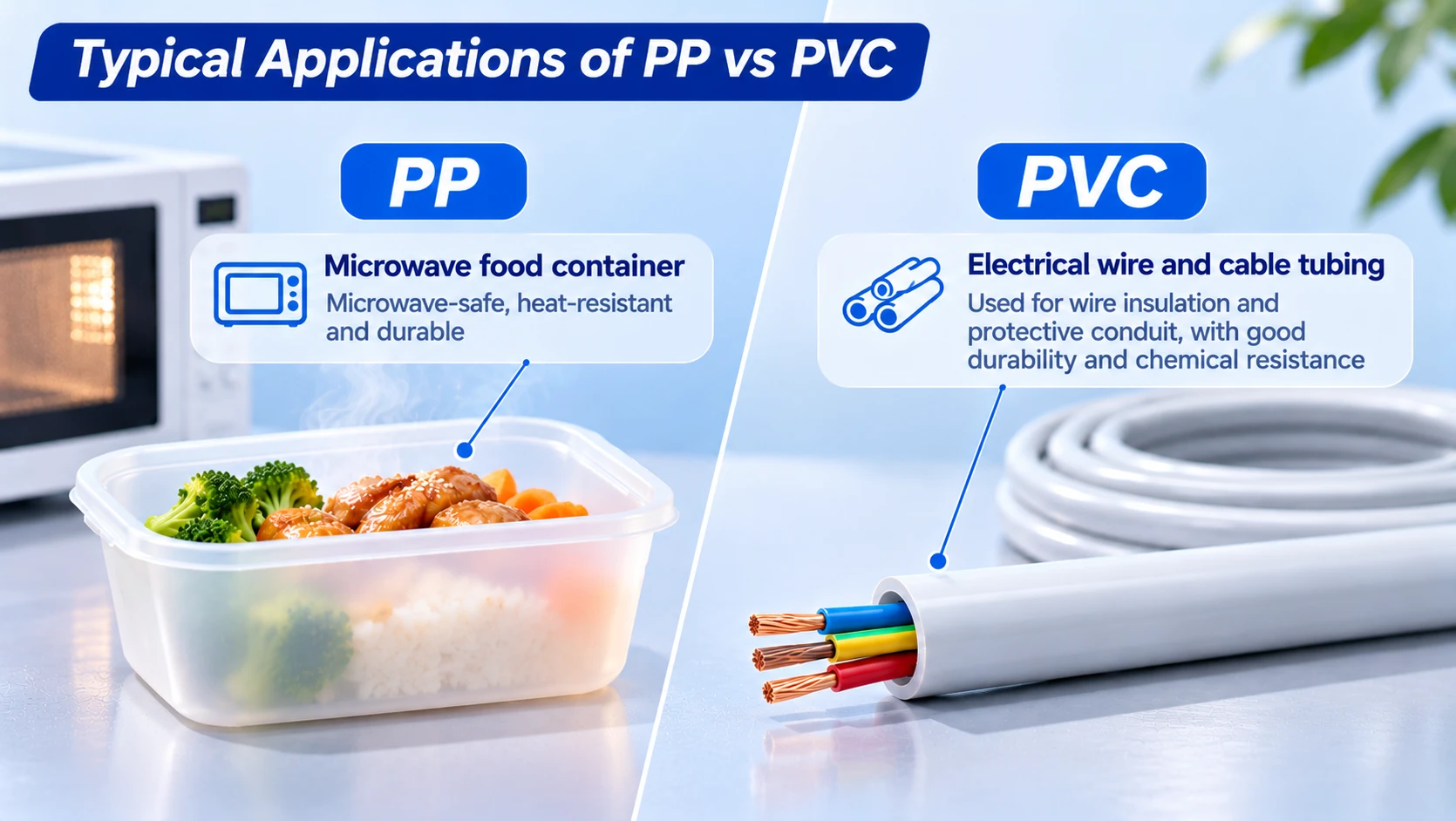
PP and PVC sound similar, but their composition, additives, heat resistance, and uses differ greatly. This article compares their core differences across five dimensions and explains why hot-food packaging is basically PP rather than PVC, as well as what these differences mean for 3D printing material selection.

pp-vs-pc-difference-transparency-comparison

The Core Differences Between PP and PC

11/03/2026

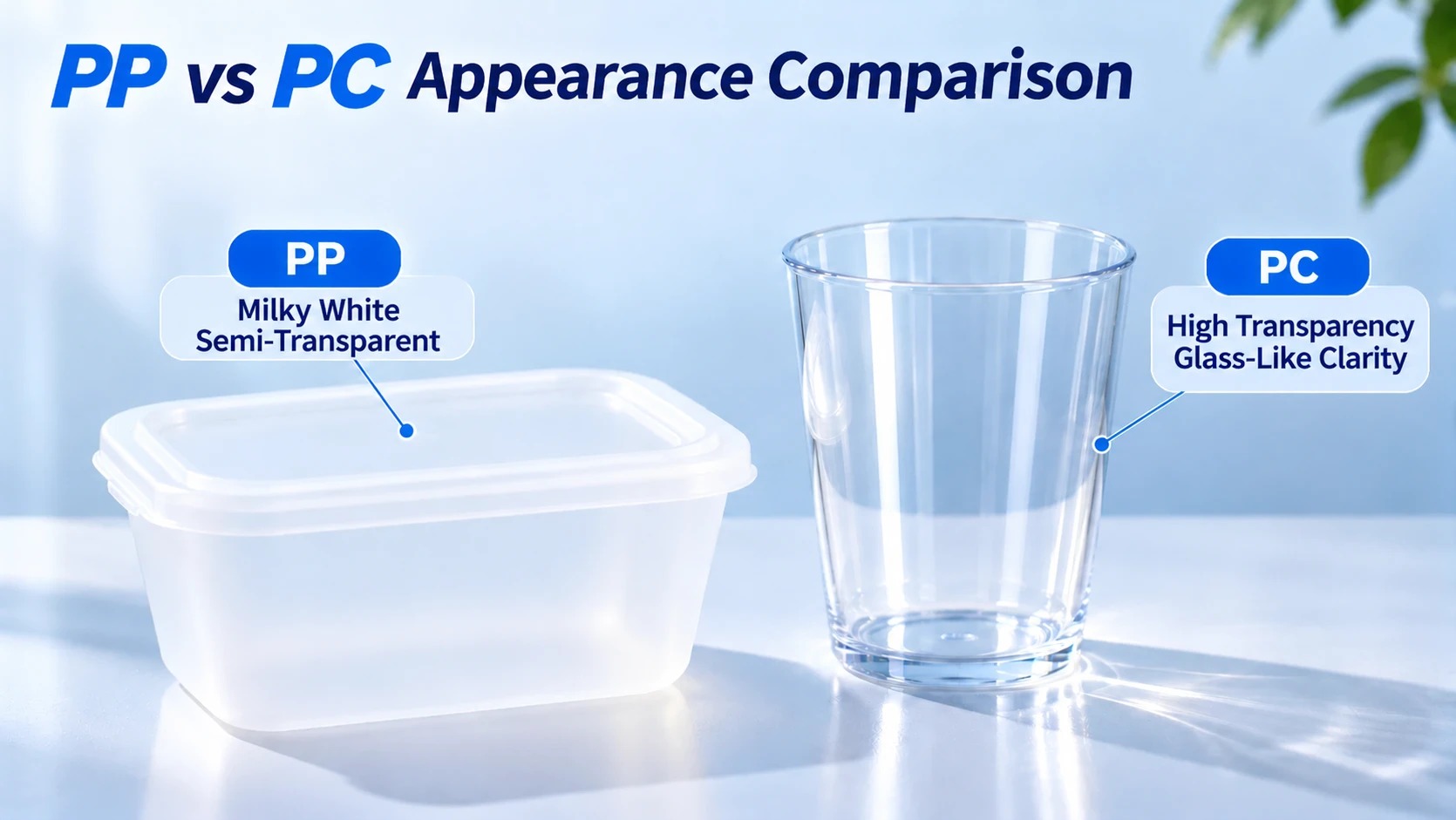
PP and PC are both common plastics, but their raw materials, appearance, performance, and uses differ greatly. This article compares their core differences across five dimensions, offers a basis for material selection, and finally explains what these differences mean for 3D printing.