News & Updates

pp-low-migration-food-safe-normal-use

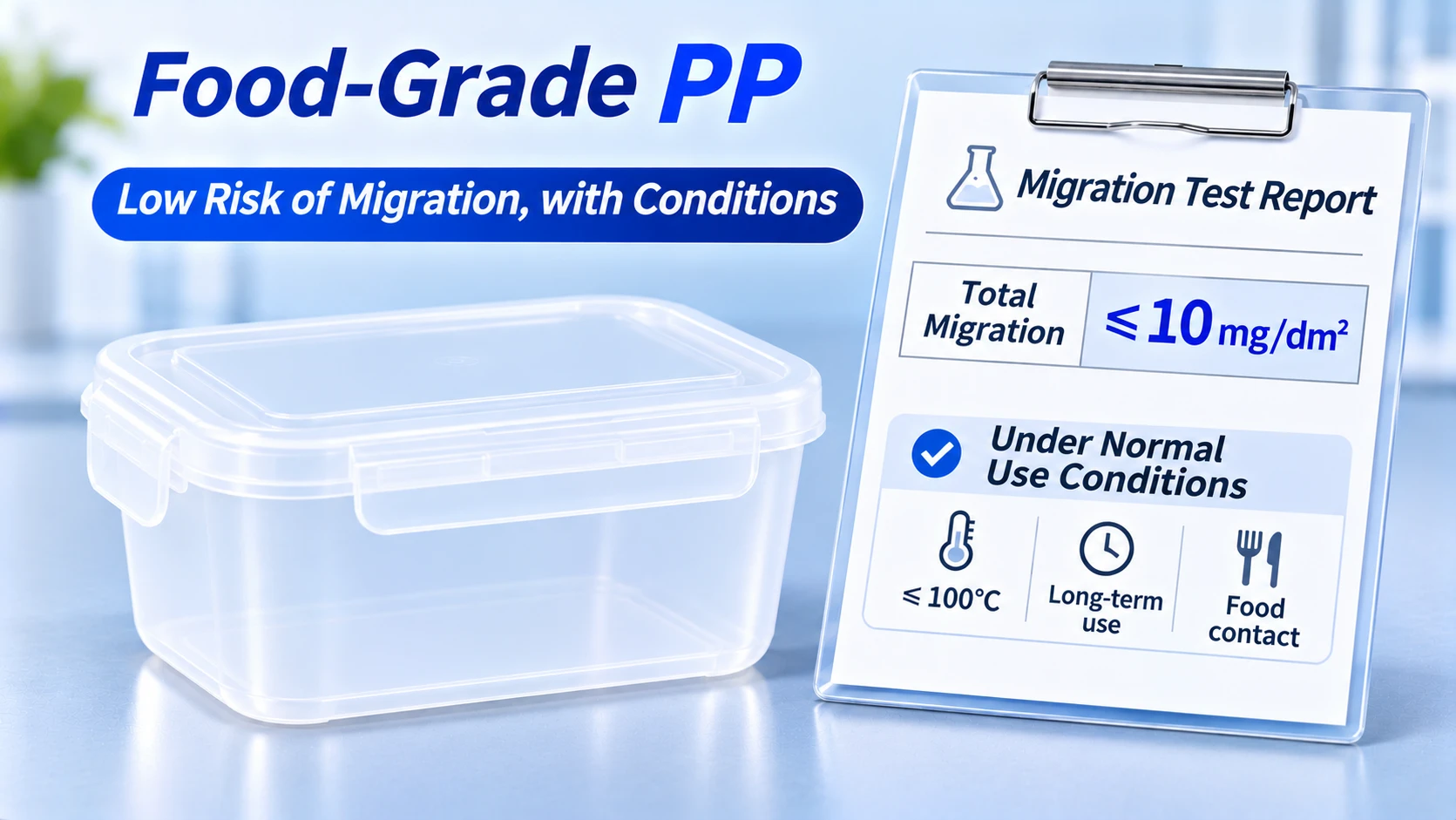
Why Is PP Unlikely to Leach Harmful Substances?

11/09/2026

PP does not readily release harmful substances, for reasons in three areas—structure, formulation and conditions of use: its large molecules do not easily volatilize or permeate, it needs no plasticizers and contains no bisphenol A, and it is chemically inert and slow to react. But there is a precondition: normal conditions of use. At high temperatures or after long-term aging, the picture changes. This article explains why PP is relatively safe and where the boundaries lie.
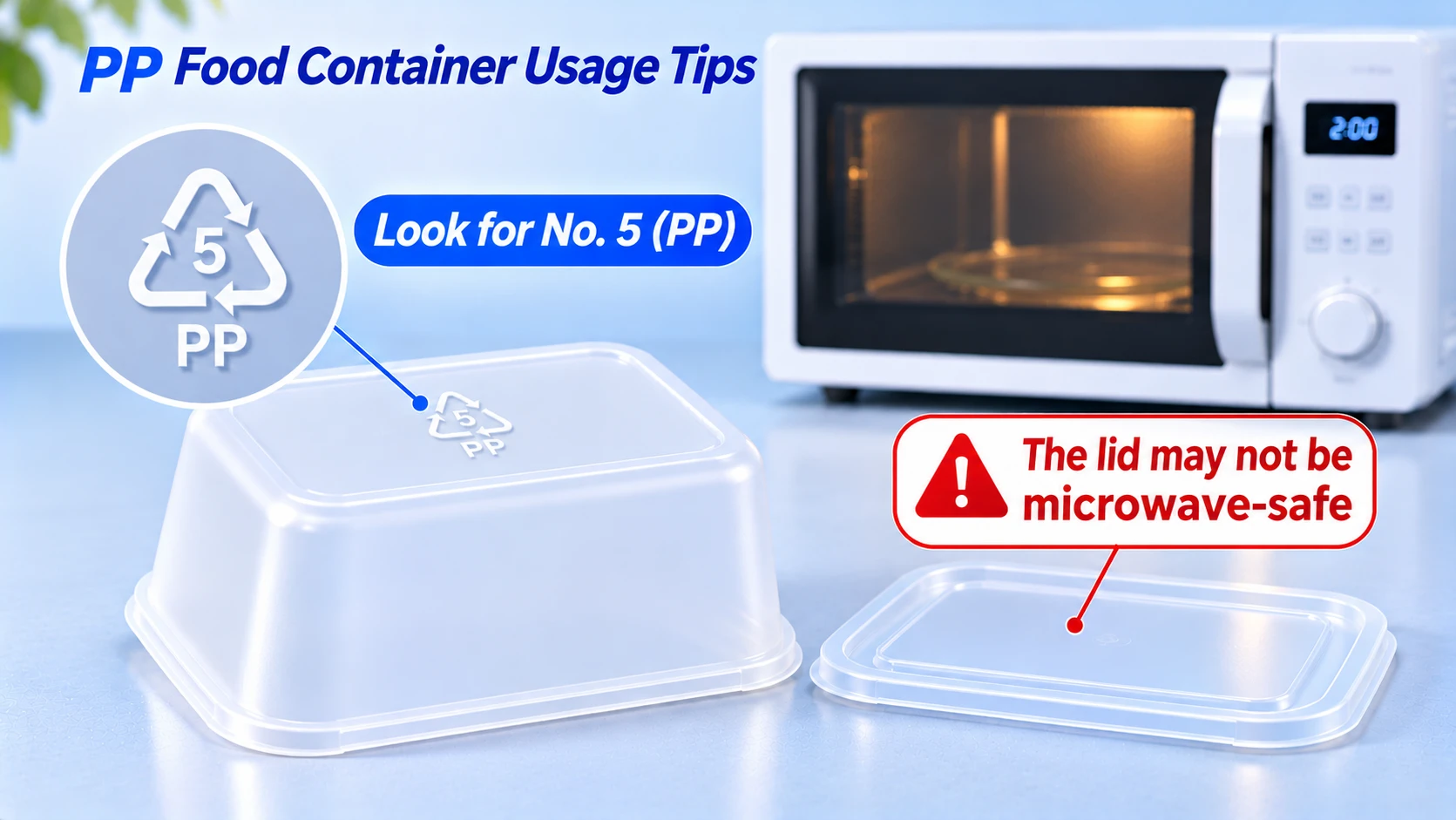
pp-food-container-microwave-safe-number-5-lid-off

Why PP Food Containers Are Microwave-Safe

11/07/2026

Most microwaveable food containers are made of PP: sufficient heat resistance, no plasticizers, and strong chemical inertness. But that doesn't mean every PP container can go straight into the microwave—lid material, oily or high-sugar foods, and whether a "microwave-safe" label is present are all easy pitfalls. This article explains why PP works in the microwave, and the few things you must watch out for when using it.

pp-heat-resistance-temperature-limit-100c-120c

How High Is PP's Heat Resistance, Really?

11/06/2026

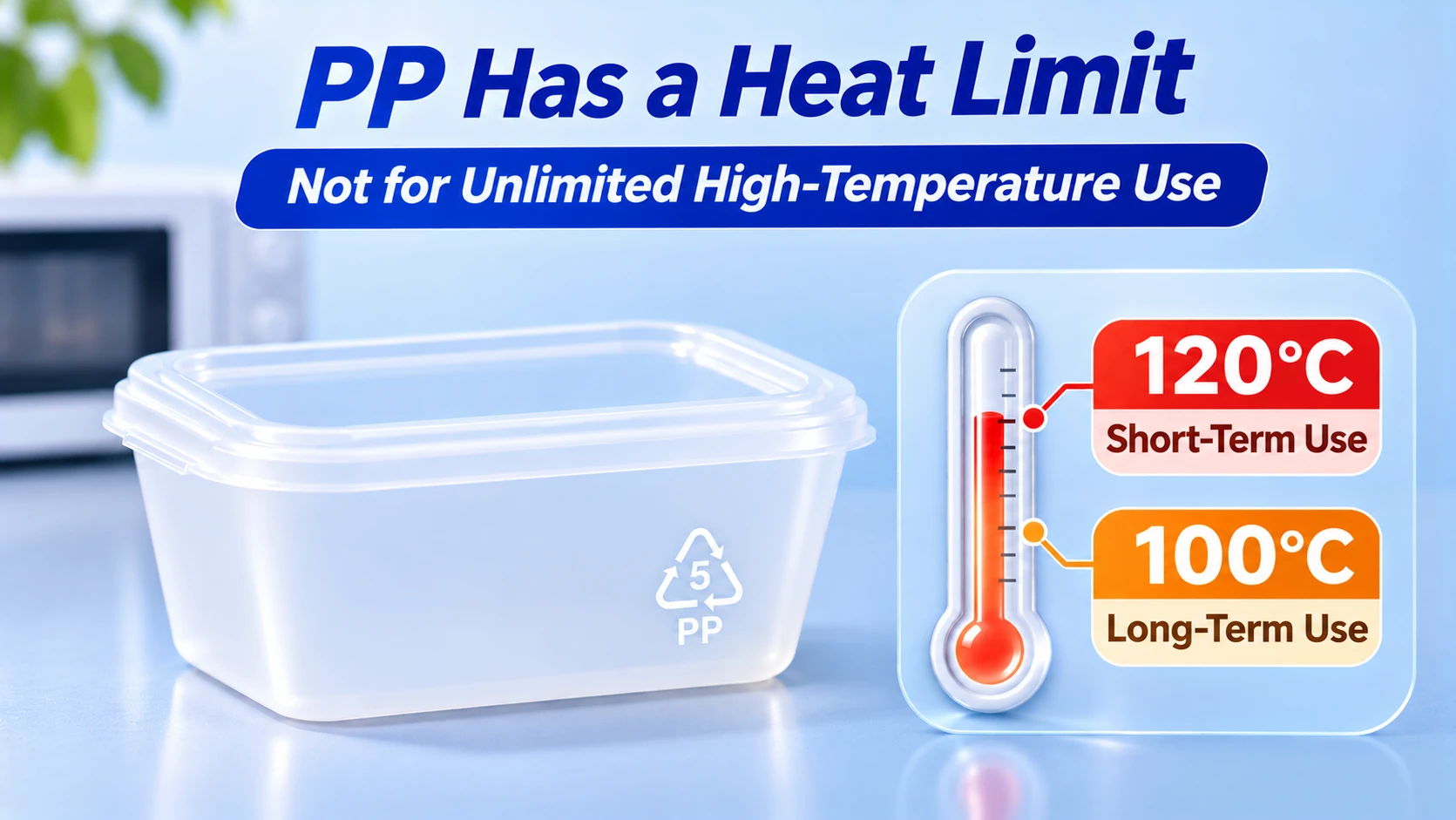
PP melts at about 164–170°C, works continuously at about 100°C, and tolerates about 120°C short-term. This article explains what each of these numbers means, what affects real-world heat resistance, and the gap between "resistant to" and "use it however you like."

pp-vs-tritan-baby-bottle-comparison-transparency

PP or Tritan for Baby Bottles: How to Choose

11/06/2026

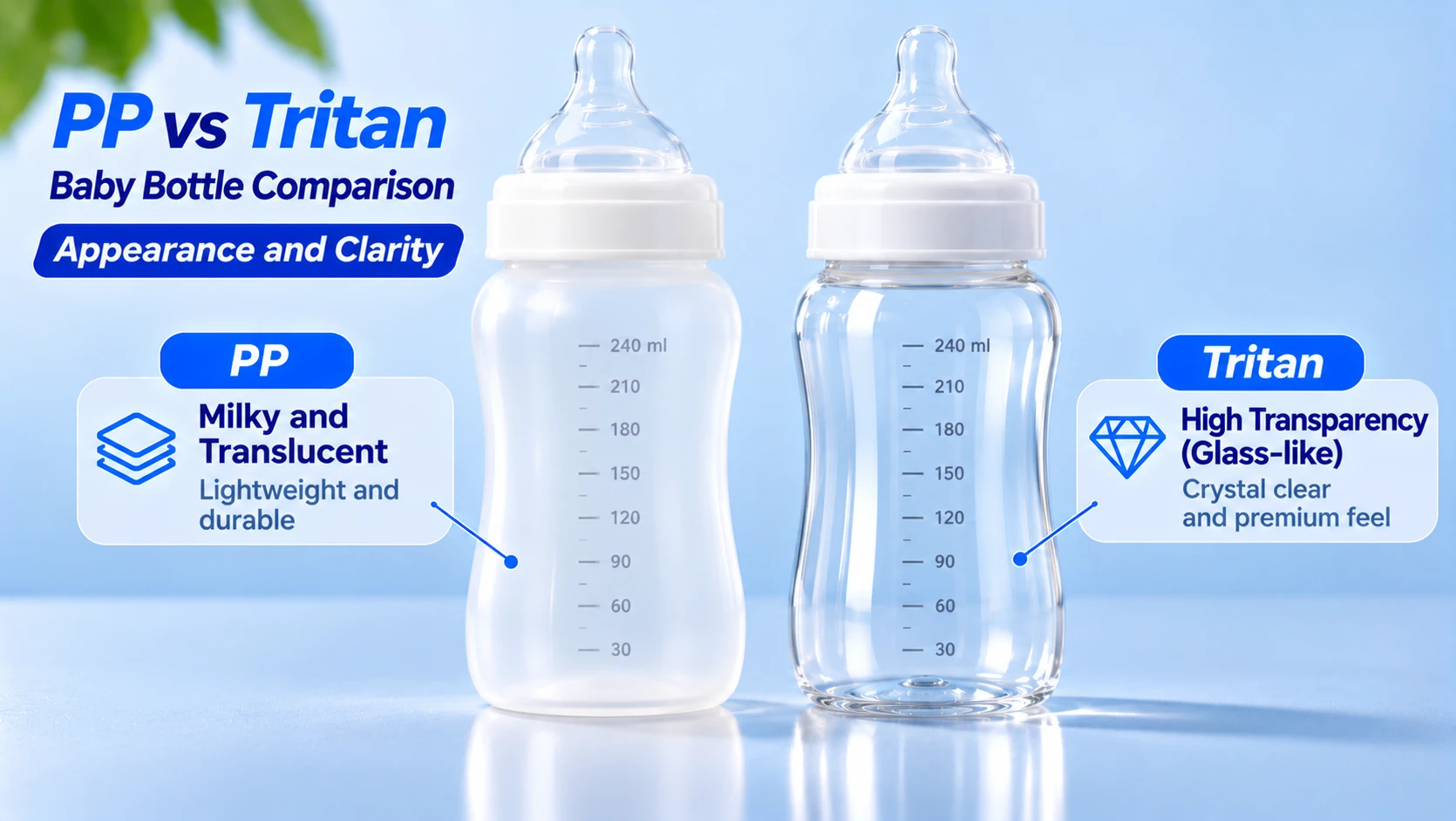
Baby bottles commonly come in three materials: PP, Tritan, and glass. PP is cheap, light, and drop-resistant; Tritan is clear as glass but costs more. This article lays out the core differences between PP and Tritan, and how to choose for different budgets and usage habits.

pp-vs-ps-difference-food-container-foam

PP vs PS: What’s the Difference

11/05/2026

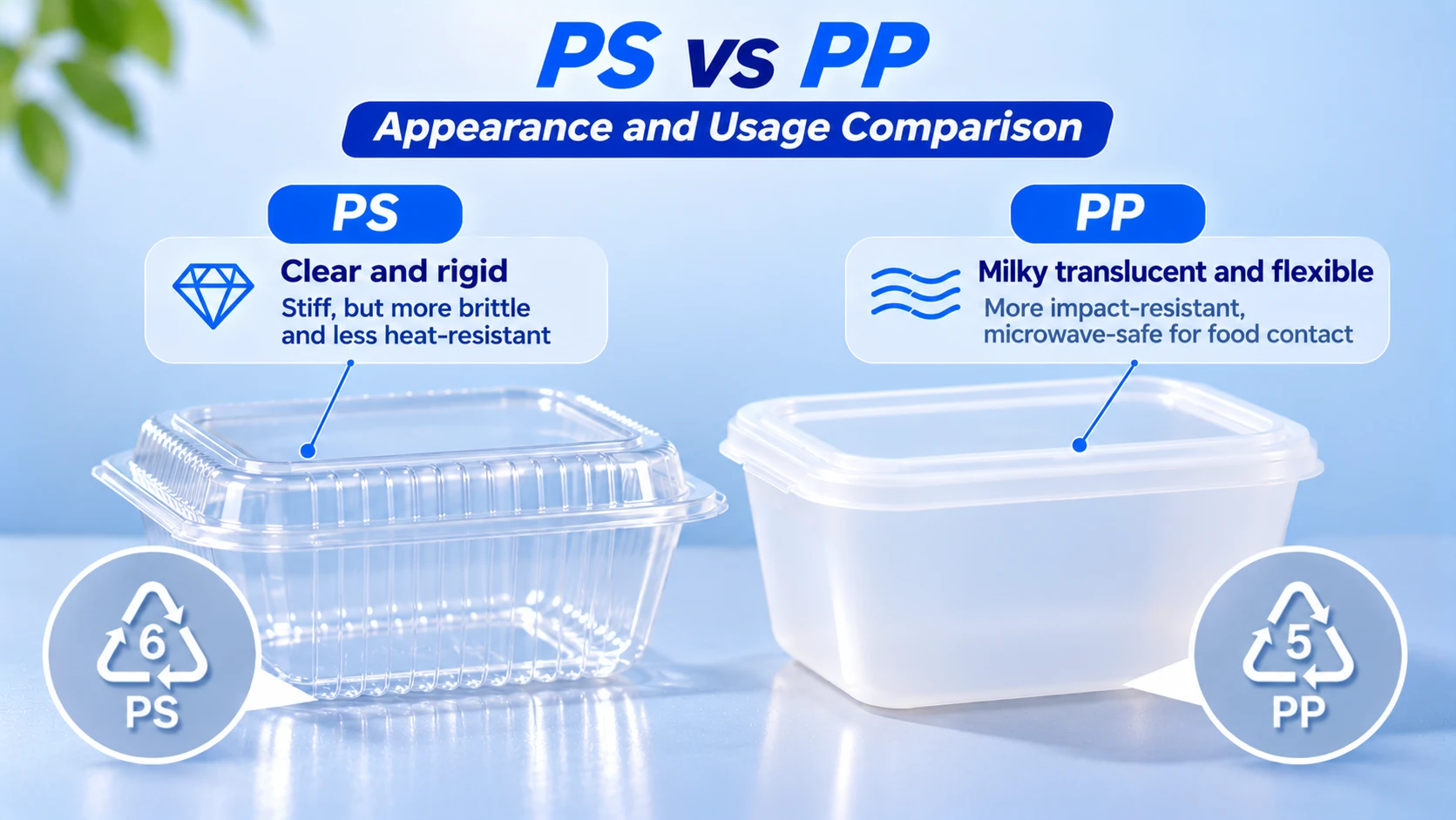
PS and PP are both widely used in disposable tableware and packaging, but one is brittle, one is tough; one fears heat, one resists it. This article explains their differences across four dimensions—transparency, toughness, heat resistance, and oil/alcohol resistance—and why microwave containers are essentially always made of PP.

 pp-vs-pet-bottle-food-container-difference

PP vs PET: Why Drink Bottles and Food Containers Use Different Plastics

11/05/2026

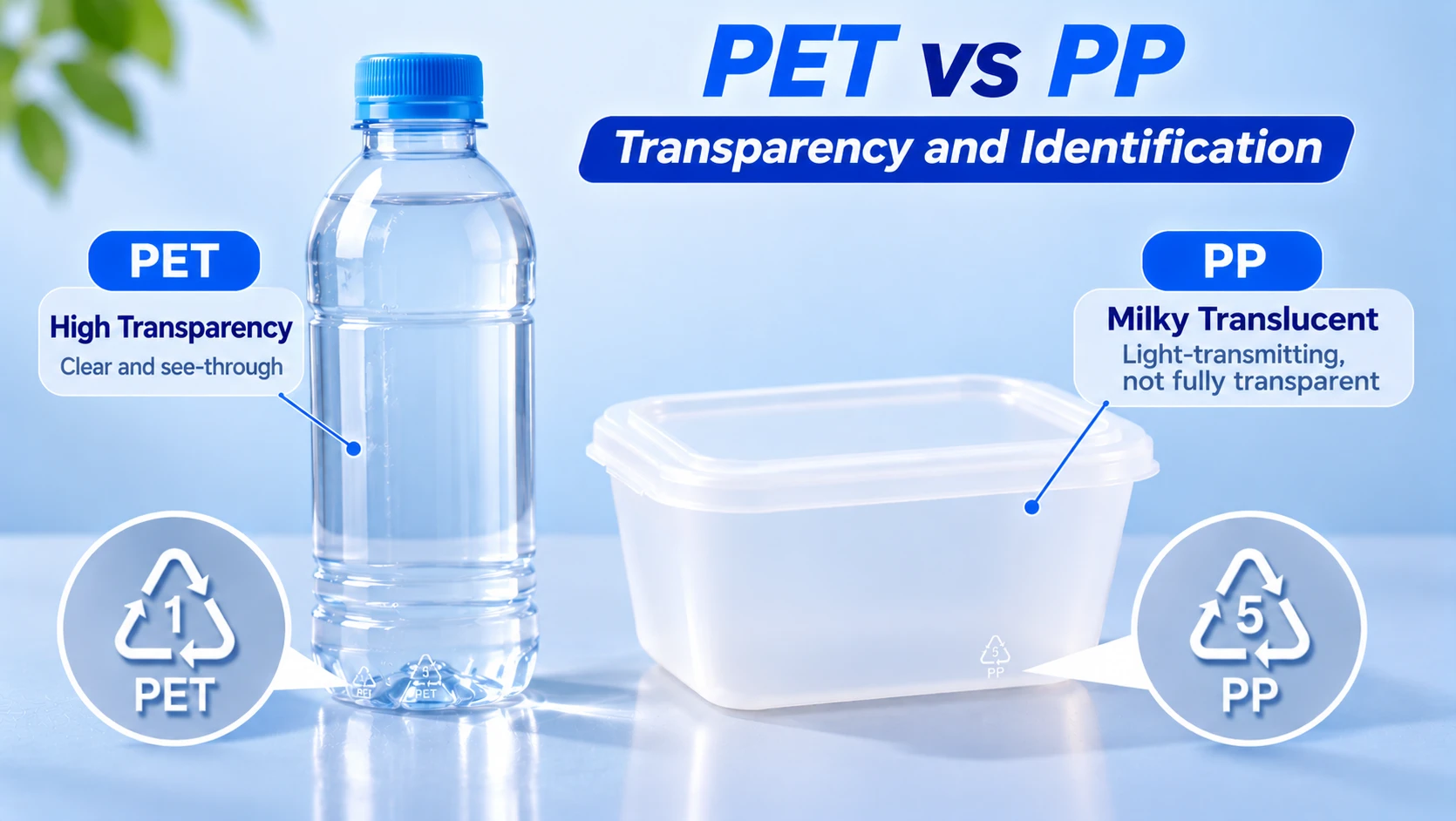
Drink bottles are mostly PET and microwave containers mostly PP. Why the division of labor between two plastics? This article explains their core differences along two main lines—transparency and heat resistance—and why PET bottles cannot hold boiling water while PP containers can go in the microwave.

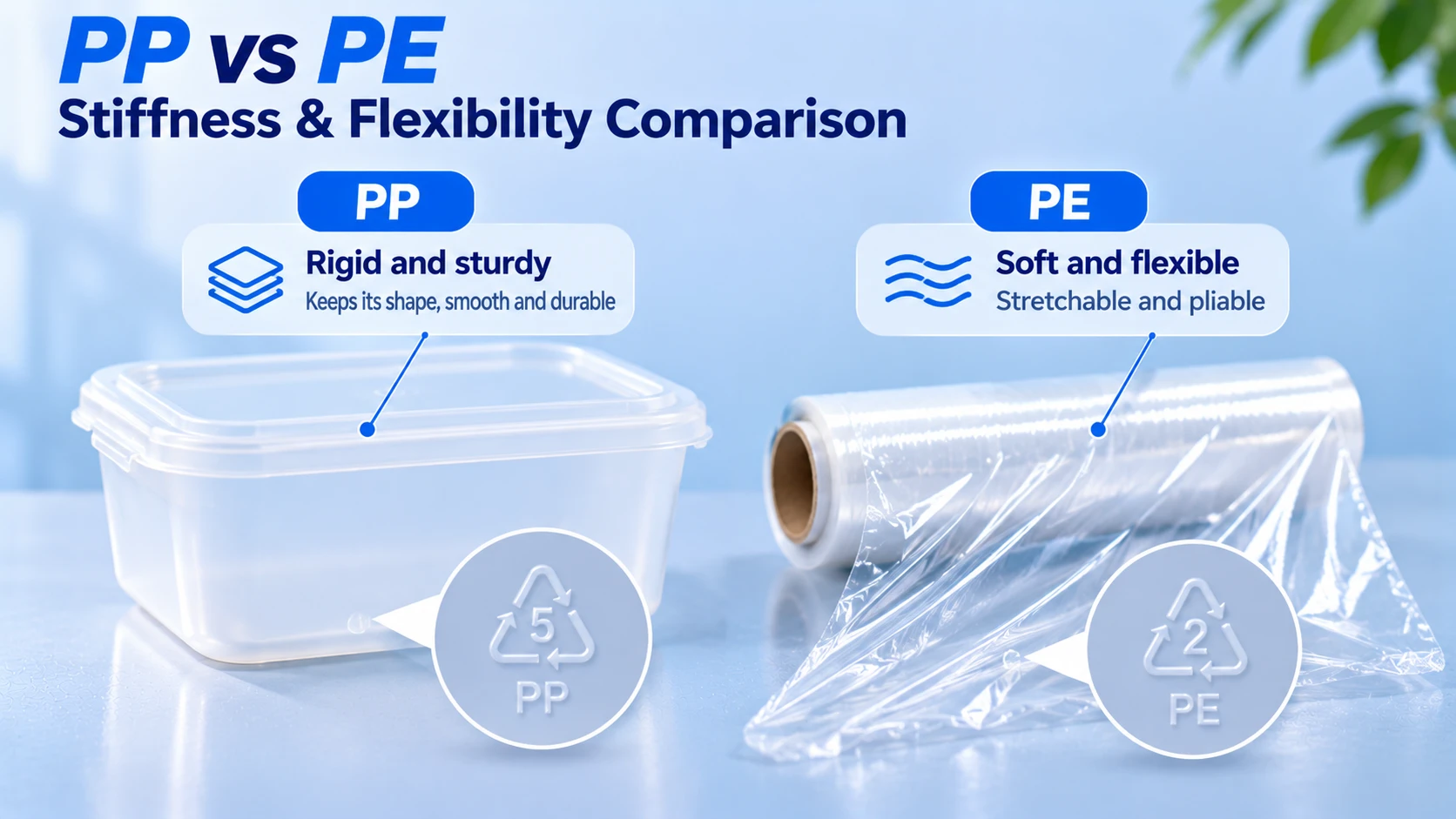
pp-vs-pe-difference-food-container-plastic-bag

PP vs PE: How to Tell Them Apart at a Glance

11/04/2026

PP and PE are close relatives—both made only of carbon and hydrogen and neither containing chlorine or BPA. The difference lies mainly in rigid versus soft: PP is harder and more heat-resistant, while PE is softer and more cold-resistant. This article clarifies how to tell them apart and the practical ways to identify them at a glance.

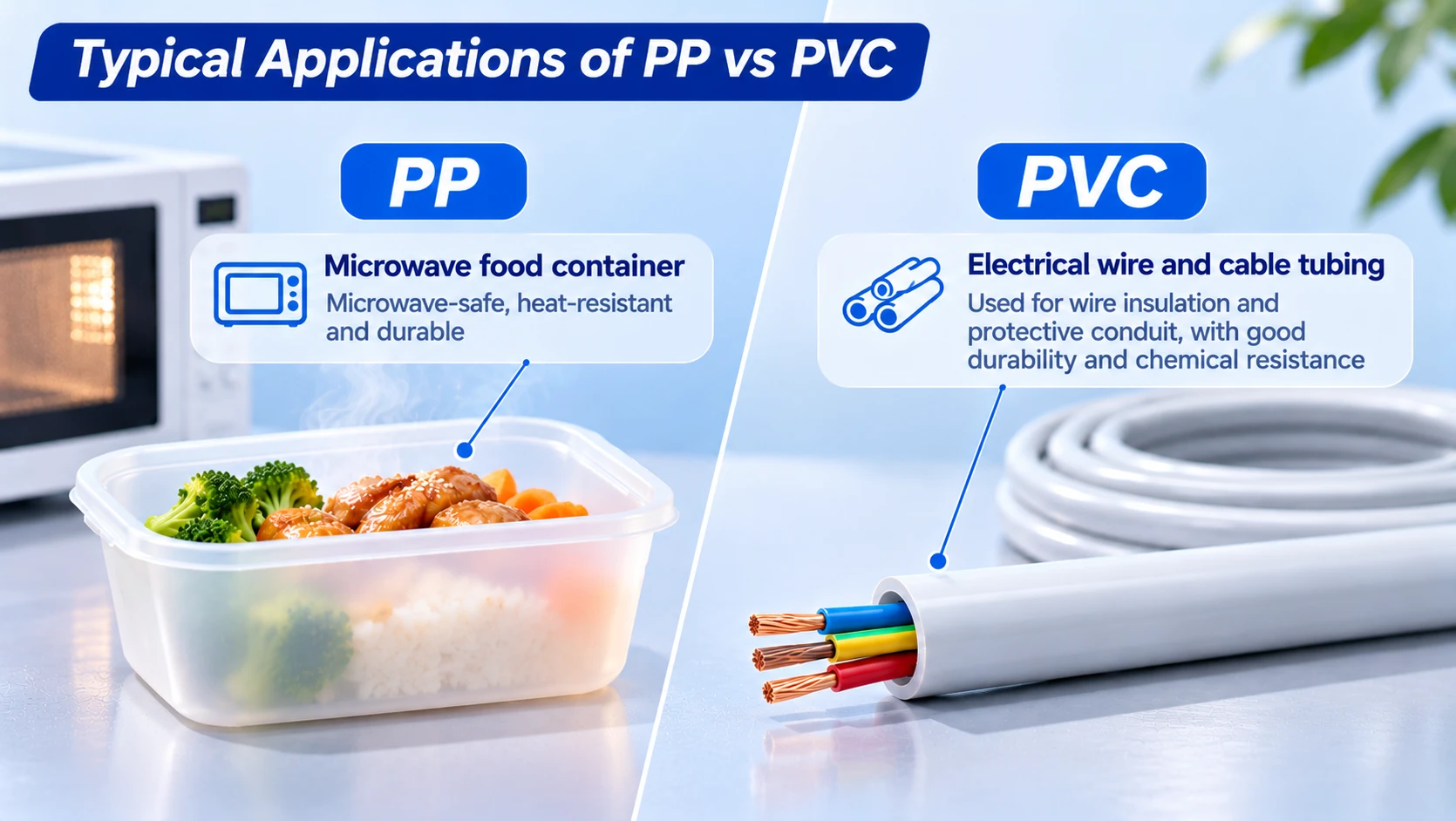
 pp-vs-pvc-difference-food-container-cable

PP vs PVC: What's the Difference

11/04/2026

PP and PVC sound similar, but their composition, additives, heat resistance, and uses differ greatly. This article compares their core differences across five dimensions and explains why hot-food packaging is basically PP rather than PVC, as well as what these differences mean for 3D printing material selection.

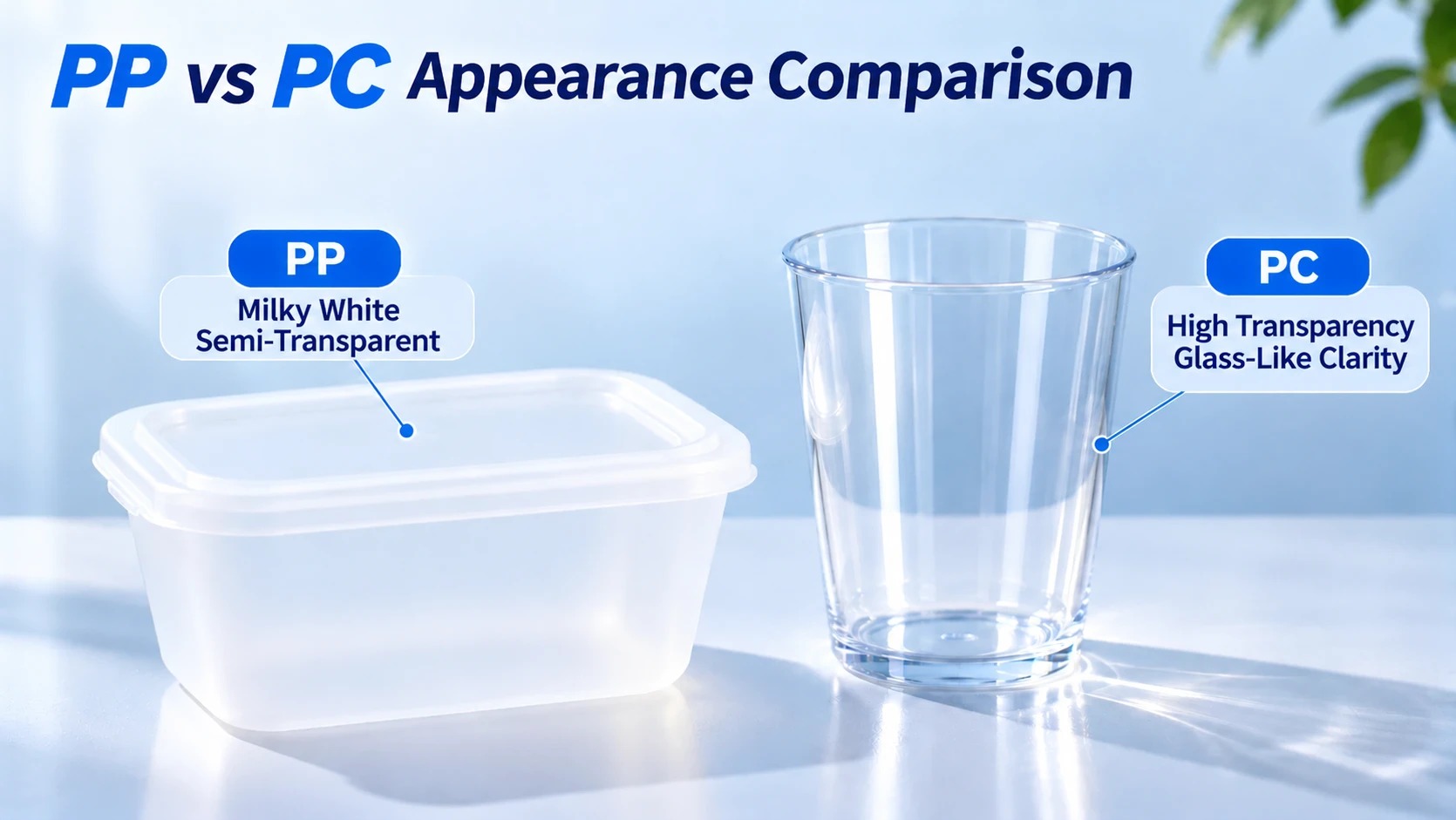
pp-vs-pc-difference-transparency-comparison

The Core Differences Between PP and PC

11/03/2026

PP and PC are both common plastics, but their raw materials, appearance, performance, and uses differ greatly. This article compares their core differences across five dimensions, offers a basis for material selection, and finally explains what these differences mean for 3D printing.