News & Updates
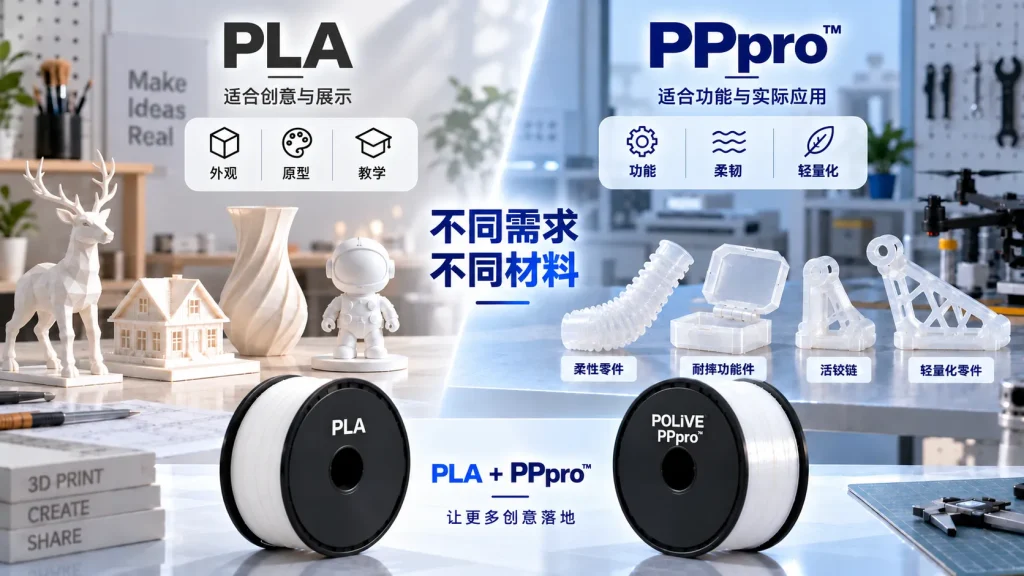
Can PP Replace PLA? Not a Replacement, but an Additional Option
10/01/2026
**This article discusses the differences between PP and PLA in 3D printing material selection. It points out that PP is not an all-around replacement for PLA, but a complement for specific functional parts requiring lightweight properties and chemical resistance. It recommends combining the two according to the function of each part.**
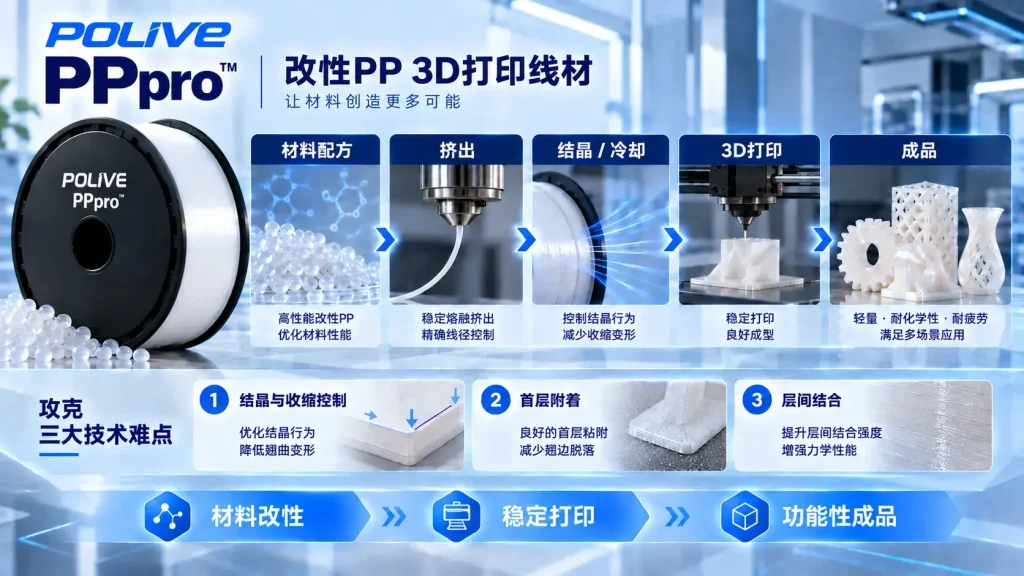
How Is POLIVE PPpro™ Made? Three Key Technical Challenges of Modified PP Filament
09/30/2026
**This article explains the development logic behind POLIVE PPpro modified filament. Addressing the interlayer bonding and first-layer adhesion difficulties of conventional PP in FDM printing, it describes how PPpro optimizes these stages through material modification while retaining core characteristics such as PP's light weight.**
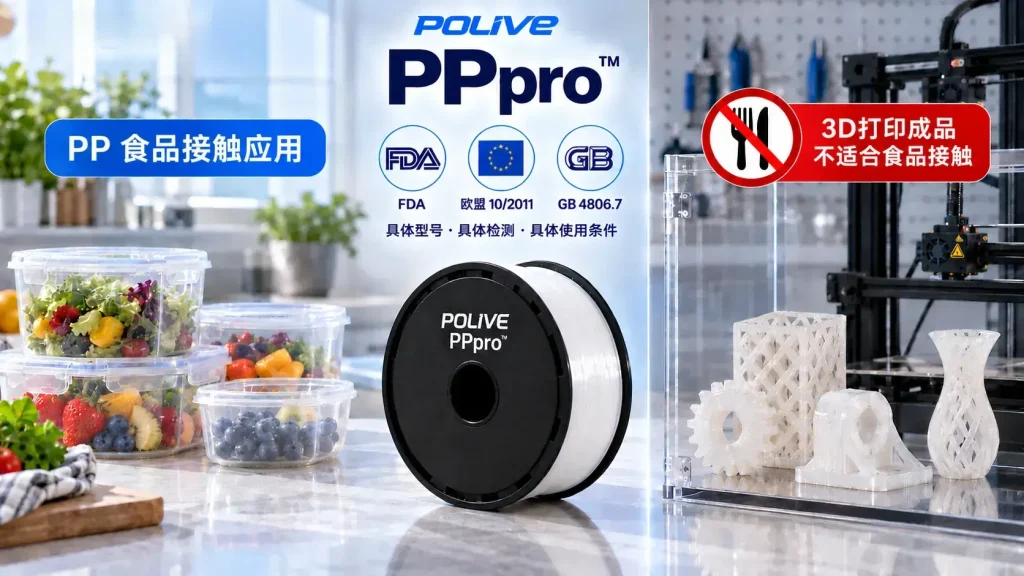
Why Is PP Commonly Used for Food Contact? FDA / EU 10/2011 / GB 4806.7
09/30/2026
**This article explains why PP is commonly used for food contact and the precautions for 3D printing. It emphasizes that a material's compliance does not equal a safe printed part; the final application must comprehensively consider additives, the printing process, and specific regulatory requirements.**
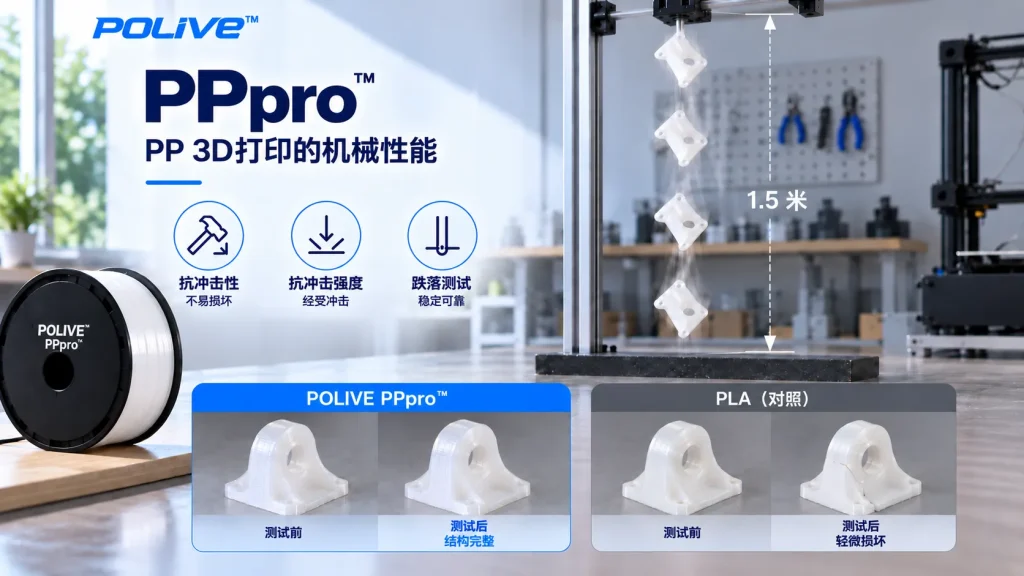
How Much Force Can PP Printed Parts Withstand? Toughness-First Mechanical Properties
09/29/2026
**This article analyzes the core mechanical advantages of PP printed parts: toughness and fatigue resistance. It points out that PP relies not on high rigidity but on ductility to absorb impact, making it suitable for drop-resistant parts such as children's toys and flexible buckles, and explains the high-strength scenarios where it is not applicable.**
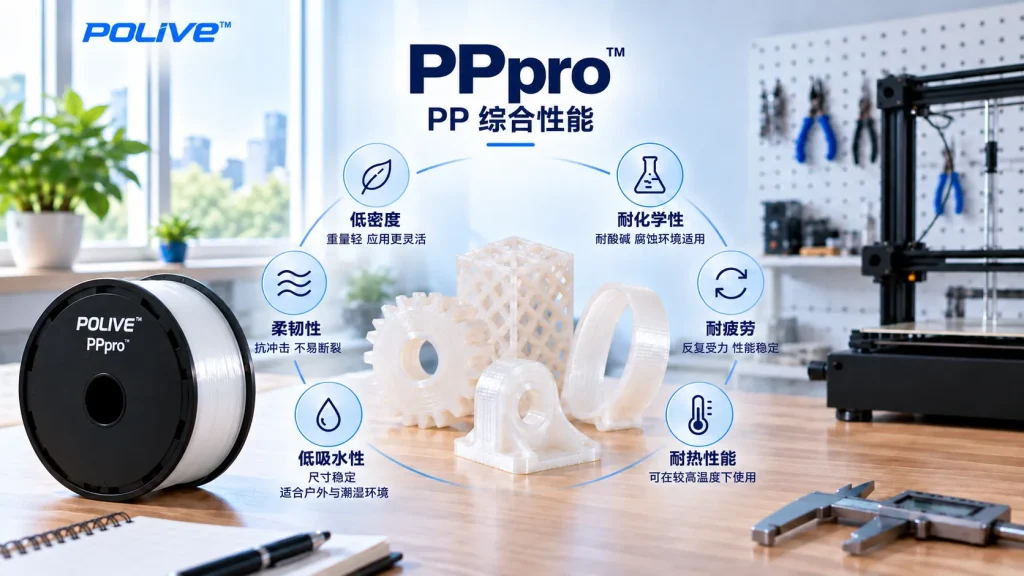
How to Choose 3D Printing Materials? An Analysis of PP's Overall Performance
09/29/2026
**This article comprehensively evaluates PP's overall performance in 3D printing. It points out that PP is not a single-category champion, but with its combined advantages of low density, high toughness, chemical resistance, and low water absorption, it is very suitable for functional parts. The article also explains how PPpro addresses the printing challenges of traditional PP.**
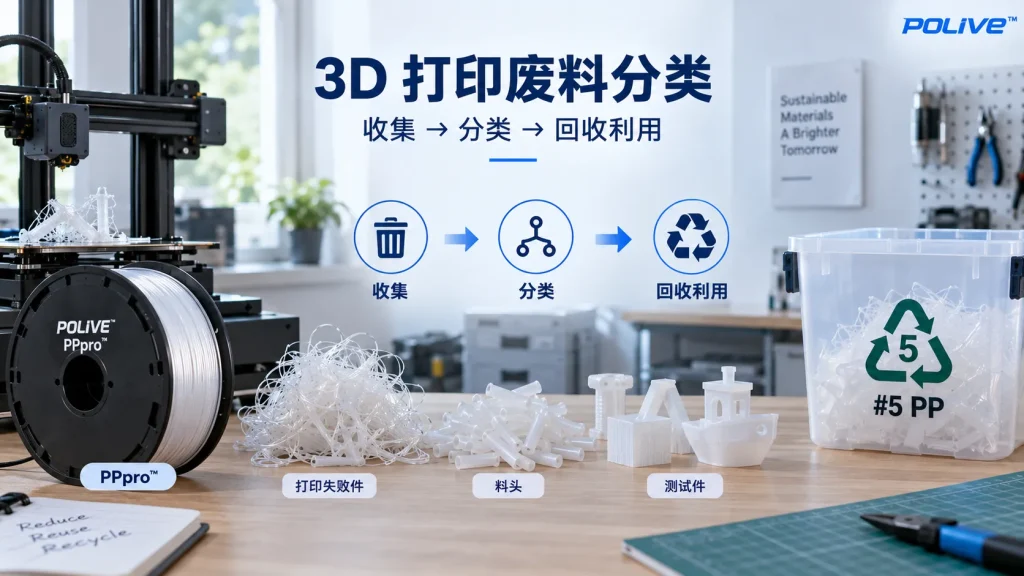
Can PP Be Recycled? Understanding Recycling of #5 Plastic and 3D Printing Applications
09/29/2026
Can PP Be Recyc
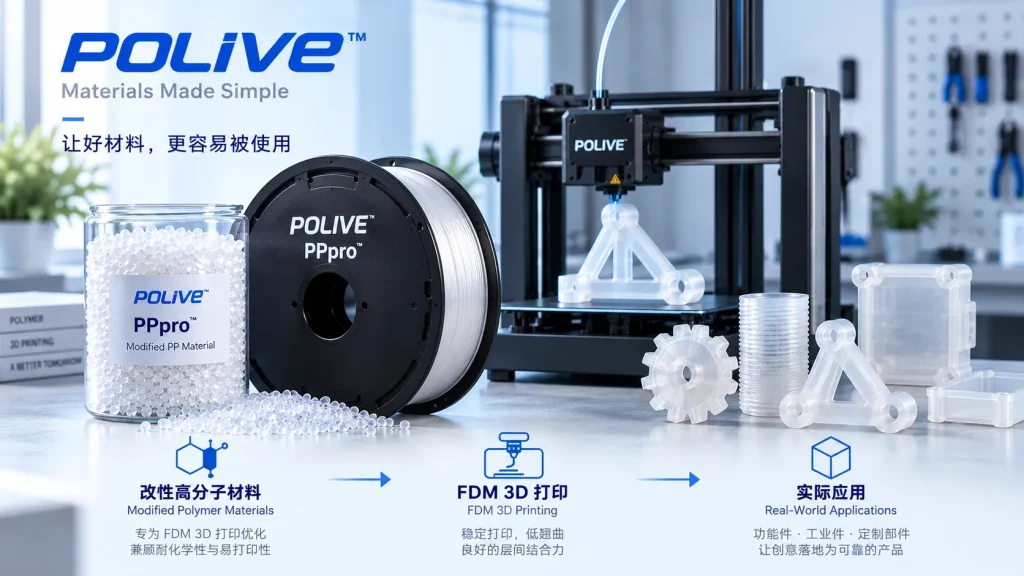
Who is POLIVE? A company that makes high-performance materials more accessible
09/21/2026
Who Is POLIVE?