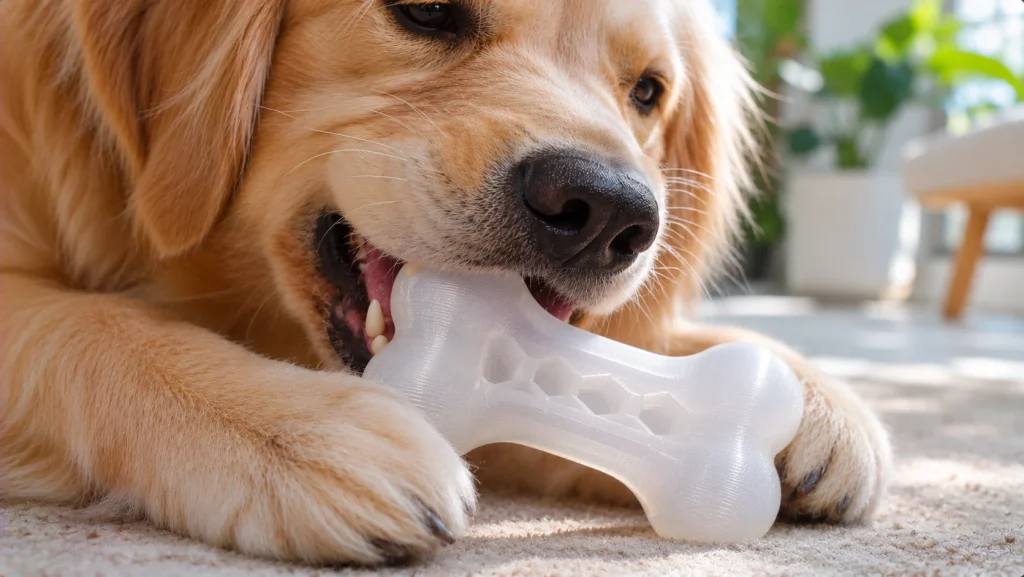
Chew-Resistance Isn’t Enough: Why PP Is the First Choice for 3D-Printed Pet Products
Many pet owners and makers love using 3D printing to make toys, bowls or treat-dispensing balls for their cats and dogs. But when printing pet products, one thing must stay top of mind:pets explore the world with their mouths, and they chew like crazy.
Two hard requirements apply to 3D-printed pet toys:
- The material must be non-toxic: while licking and chewing, the pet must not ingest harmful chemicals.
- The material must be tough: if it ever breaks apart, the fracture edges must not be as sharp as glass shards, or they can easily injure the pet’s mouth and gut.
Why Is PP an Excellent Choice?
- Non-toxic, low leaching: PP (polypropylene) contains no BPA (BPA free) and does not rely on plasticizers to stay soft, meaning it releases no harmful substances while being chewed. PP is even widely used in microwave meal containers — a very safe material foundation.
- Tough, tooth-friendly: when a PLA toy breaks, its fracture edges are razor sharp. PP’s extremely high toughness lets it deform under bite force, making it very hard to chew apart completely.
Design details for printing pet toys with PPpro:
Thanks to PP’s toughness, many of the old workarounds are unnecessary. You do not need a heated bed or an enclosed, insulated chamber the way ABS demands — PPpro prints with the lid open.
But pay attention in structural design:Never print it too thin. Start with a wall thickness of at least 2 mm, or go with 100% solid infill. Give every edge a generous fillet so no sharp corners remain.
Summary:
For pet toys, safety and durability always come first. Avoid brittle materials that shatter under a bite, choose PPpro — non-toxic, low-leaching and extremely tough — and pair it with thick walls and large fillets, and you can custom-build toys for your furry friend that are safe and built to last.