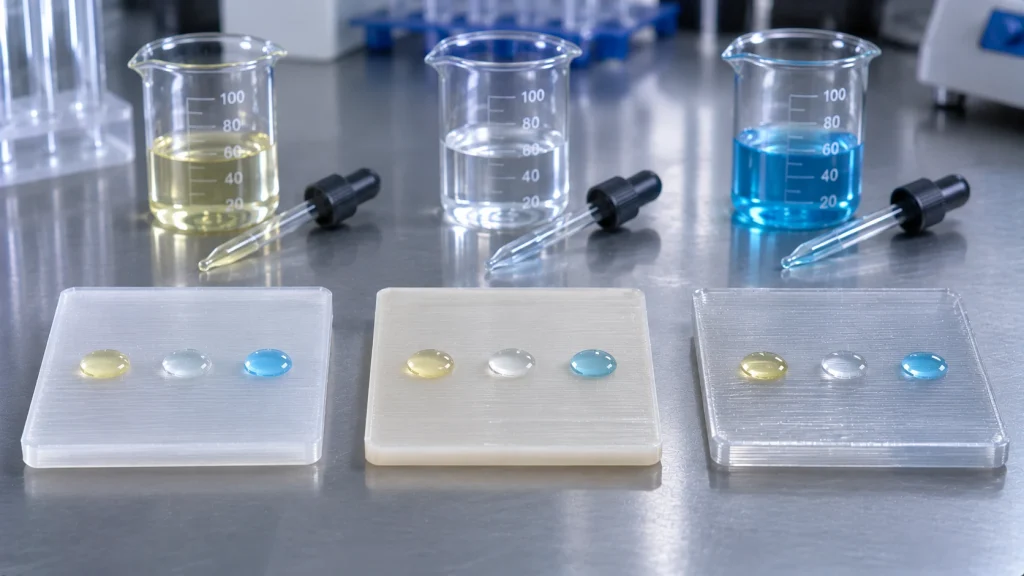
PP vs PVC vs PETG for Chemical-Resistant 3D Printing: Which Material Holds Up?
For 3D printed parts that touch water or chemicals (water-treatment jigs, detergent caps, laboratory positioning parts, for example), the biggest fear is the material corroding, swelling or even cracking.
Before choosing, take a look at the hard numbers on chemical resistance for common materials:
| Material | Acid resistance | Alkali resistance | Solvent resistance | Printing Difficulty |
| PLA | Poor (hydrolyzes easily) | Poor | Poor | Extremely low |
| PETG | Good | Good | Fair (affected by some alcohols) | Low |
| PVC | Good | Good | Good | Extremely high (releases toxic hydrogen chloride when heated; not suitable for ordinary FDM) |
| PP (PPpro) | Excellent (at room temperature) | Excellent | Good | Fair (PPpro improves adhesion) |
1. Why Not PLA or PETG?
PLA hydrolyzes easily in water, acids and alkalis, turning brittle and cracking over time, so it is only good for display pieces. PETG is stronger than PLA, but its molecular chains contain ester bonds that are still slowly attacked in strongly acidic or alkaline environments. Fine for slightly acidic juice, not for industrial cleaning agents.
2. What About PVC?
PVC’s own chemical resistance is genuinely good, but it is essentially banned in ordinary FDM printing: when heated it releases toxic hydrogen chloride gas, which corrodes the machine and harms the human respiratory tract.
3. PP’s Natural Advantage
Polypropylene (PP) has a saturated hydrocarbon chain with no polar groups, a structure that gives it strong resistance to most acids, alkalis, salt solutions and detergents. People used to avoid PP for these parts because it warps so easily that a good print was nearly impossible. PPpro modified PP filament has crossed the “poor adhesion” hurdle, printing PP-level chemical resistance with no heated bed and no enclosure at room temperature.
Final testing tip:
If you are not sure whether a material can hold your chemical, the reliable way is not reading datasheets but printing a small coupon from scrap and soaking it in your actual chemical for 24 hours. Watch whether the surface softens or turns tacky, and weigh whether the mass has increased. Data beats any claim.